We had a morning flight back to Arusha from the
Serengeti Air Strip that necessitated our being up at 4:30, bags out by 5:00
and leaving at 6:00. Who says vacations are for sleeping in? But then, if we’d
left later we would have missed this gorgeous sunrise. Here’s Larry with the
plane, a single engine model seating 15.

 |
| Us with Tanzanian guides Severin and Manase |
Because he was one of the tallest in the group and
likes flying in small planes, Rachel asked Larry if he would mind ‘riding
shotgun’ in the co-pilot’s seat. He had a great time during the flight reading
the instrument panel and trying to figure out all the details. Our flight took
us almost directly over the places we had already been: the Serengeti National Park, Lake Manyara and
the Ngorongoro Crater. It was quite a different sight from 9,200 feet above sea
level, or about 2,000 feet above the top rim of the crater. Here are a few
shots from the flight:

 |
| Over Ngorongoro Crater |
 |
| We drove this road along the rim of the crater |

Once back in Arusha, we boarded a small bus and
drove up to the Kenyan border. Once through customs, and having been able to
avoid the throng of souvenir peddlars that swarmed the area on the Kenyan side,
we continued our journey into Amboseli National Park. Here we were staying at
the Serena Amboseli Safari Lodge. Here are some photos of the lodge:
 |
| Our Room |


Once settled into our rooms, we had lunch and a
little free time before our afternoon game drive. We took the opportunity to
sit down in the covered porch area overlooking the park, have something to
drink and read our books. Rachel had previously warned us about the Vervet
Monkeys that hang around the lodge and their shenanigans. There is always
coffee and tea available as well as some small cakes for the guests, but the
monkeys are always looking for a treat, and will not hesitate to steal the cake
right off your plate. We knew this and made sure not to have any food around,
but there were a few other guests who had just sat down with coffee and cakes
in front of them. In less than a flash, we witnessed ‘grand theft Vervet’! In three
bounds, the monkey jumped down from the roof over our heads, landed on a short
stone wall, leaped across to the table and had grabbed the cake. It took him
even less time than that to disappear. Now, the lodge employs Maasai men as
security guards and to help keep the monkeys away from the guests (using sling
shots) but even the closest one wasn’t fast enough to get the monkey to drop
his stolen goods. Don’t they look cute when they’re not pilfering from the
guests?

Our game drives in Amboseli started a little later
in the afternoon – 4:30 – so we would have a better chance of getting animals
on the move to their night-time spots, and perhaps a good view of Mt.
Kilimanjaro. Well, the mountain didn’t do much more than just tease us, peeking
through the clouds here and there and dropping rain on us. But we managed to
see a lot of wildlife nonetheless:
 |
| Hyenas |
 |
| Great Crowned Cranes mating dance |
 |
| A hippo foraging. Usually they only come out of the water at night when it is cooler but because of the weather this guy was out early |
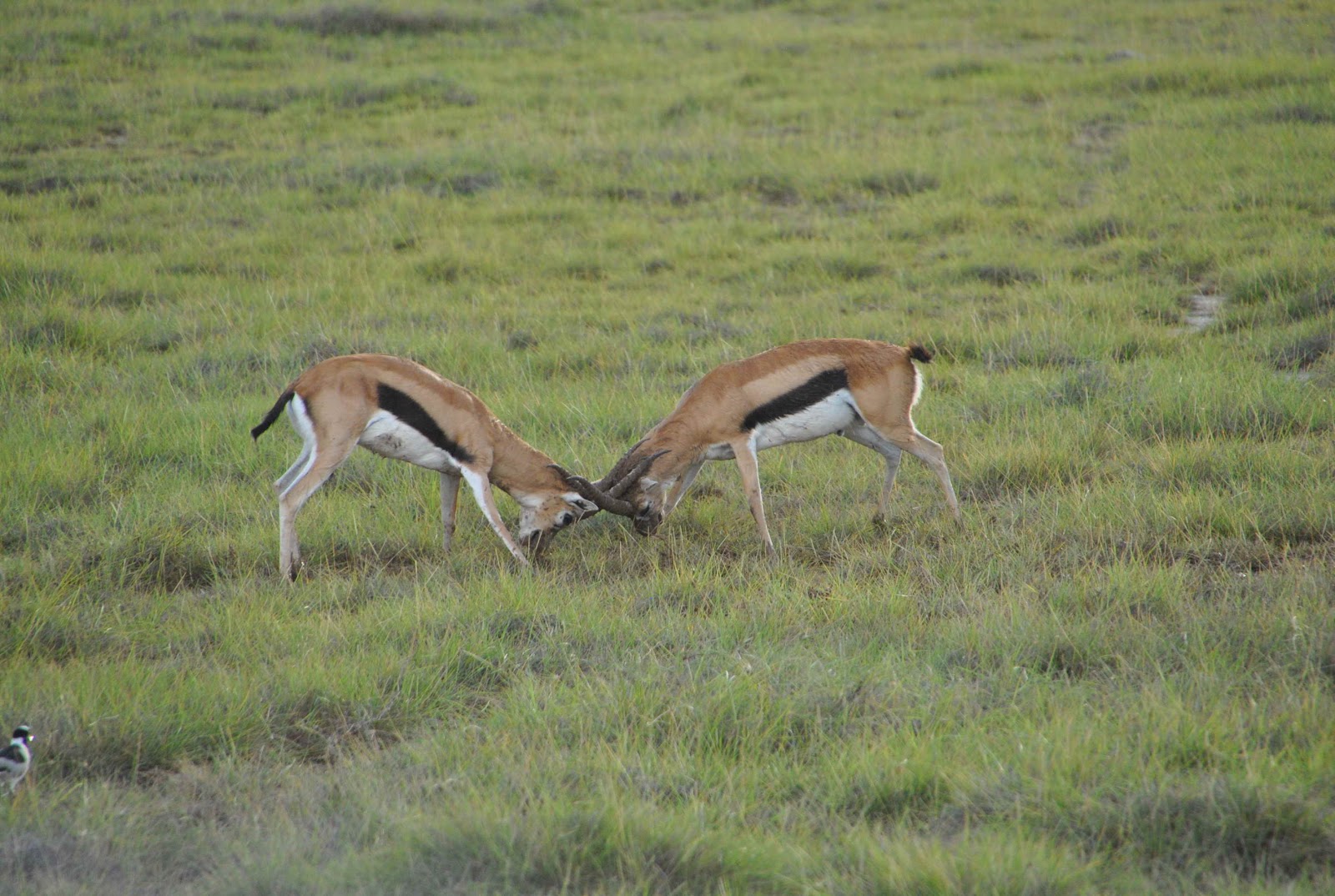 |
| These two Thompson's Gazelles were fighting to be the dominant male in the group. We could hear how hard their antlers crashed |
 |
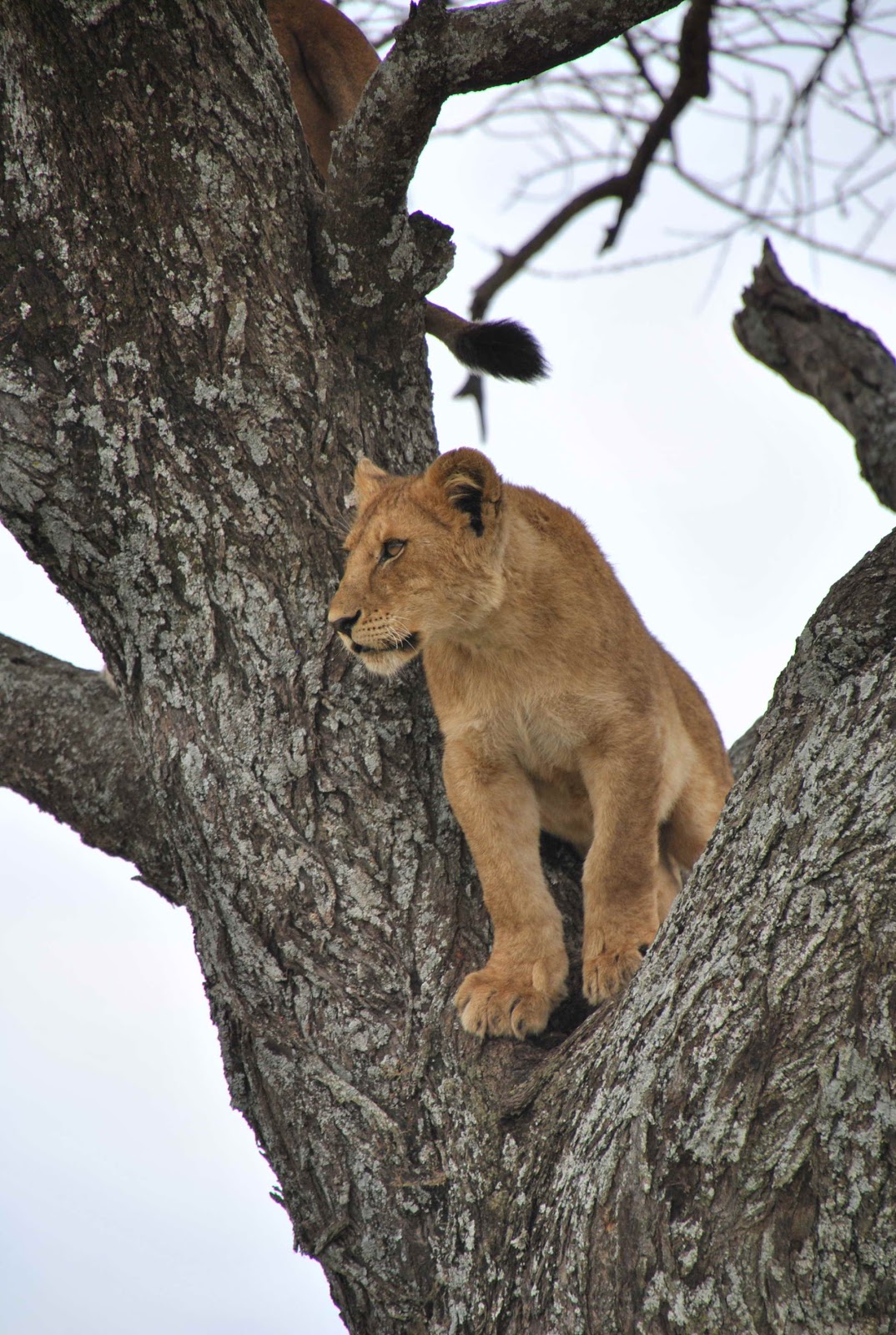
| Lioness and her cub walking home. She was keeping an eye on a couple of hyenas not too far away |
 |
| Doesn't he look a lot like little Simba from 'Lion King'? |
 |
| Safely headed toward the setting sun |
The next morning and we were out early again, but
this time on a visit to a local Maasai village. We were greeted by Daniel, the
young man in charge of such visits. They bring money into the village to
purchase items that they don’t generate in the traditional way. The villagers
tend cattle, sheep and goats the same as most other Maasai and live
traditionally, although Daniel has an ‘office’ out behind the village where he
has a computer and cell phone service so he can arrange and co-ordinate tourist
visits. There are actually more cell towers around Tanzania than in many areas
of North America and the service, including Internet, has been relatively good
for us even though we’ve been in some remote spots. Back to the village. Here
are some photos of the welcome ceremony and the village:


 |
| John, the village medicine man with some of the herbs he uses. Villagers can still go to hospital or clinic if he can't help them at home |
 |
| Dick and Dona will be celebrating their 50th anniversary this year, so Rachel arranged a special ceremony for them at the village |
Because it had rained quite heavily the night
before, there was quite a bit of mud along with the standard cow, sheep and
goat manure on the ground. And because of all of this, there were more flies
than usual. To help counteract this, the villagers loaned us all zebra tail
flyswatters with beaded handles:
 |
| Thanks, Rodney for modelling some of the billions of flies |
 |
| Larry's Maasai flyswatter |
After our visit to the village, we went back to the
hotel for breakfast and some time out during the day – we think we spent most
of that working on the blog – before making a short visit to the Cynthia Moss
Amboseli Elephant Research Project. A number of researchers have been working
here for 40 years identifying, tracking and studying the elephant population in
Amboseli. From this research they have discovered many interesting and
surprising things about elephants, including their social hierarchy, how they
communicate, and especially how good their memories really are. Elephants DO
NOT FORGET much of anything, and their social structure ensures that all the
knowledge from one generation is passed on to the next and the next. The
matriarch is the oldest female in any group; remember that bull elephants are
usually loners so groups are made up of females and young males. She is
responsible for leading the group in emergencies and for passing on what she
knows and what she has learned from her elders to the next generation. It is
absolutely fascinating to realize just how intelligent and caring elephants
are. At the end of the talk, Rachel advised us that Tauck made a $50 donation to the Project on behalf of each of us on the tour.
 |
| Researcher's tent at the elephant project |
 |
| Some elephant jaw bones. Elephants have been known to come into the compound, locate the bones of family members and grieve for them. |
Our afternoon game drive started when we left the
research project. Having just heard about elephants in detail, we were lucky to
find some on their way to their overnight resting area, but before that we saw
a few birds:
 |
| Guinea Hen |
 |
| Pink headed Pelicans |
 |
| Eagles |
 |
| Elephants in front of Mt. Kilimanjaro |


And as it was getting close to sundown, the hippo
pool was starting to come to life. The big guys who had spent the day wallowing
in the water were ready to come out to eat.

And that was our cue to get back to the hotel for dinner!
Another early day tomorrow as we fly from Amboseli to the Mt. Kenya Safari
Club.